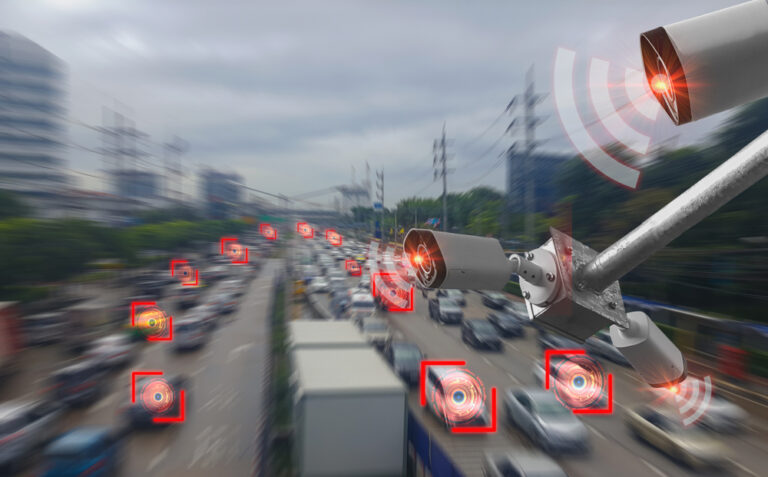
Artificial intelligence in video surveillance has recently generated a lot of buzz in the security sector. Every day, dozens of articles with titles like “Artificial intelligence in video surveillance is…” are published, but if you look past the hype surrounding the subject, you can see that there is some terminology confusion and minor inconsistency that can lead to a misunderstanding of technology in general.
So, artificial intelligence (AI)
To start, you must comprehend what AI is in the broadest sense possible:
- A subfield of computer science called artificial intelligence (AI) researches and creates tools for simulating intelligent behaviour.
- This is a fairly broad notion, and if you examine it more closely, you will see that it includes subcategories like deep learning and machine learning.
The category of AI known as machine learning is the most significant technology in this field, according to our analysis of AI in the context of the video surveillance sector.
Machine learning is a technique that enables computers to enhance algorithms by learning for themselves from real-world instances. Then, the enhanced algorithms are applied to evaluate photos or their sequences to produce metadata, alerts, or other data.
But we shouldn’t ignore deep learning, another branch of artificial intelligence that has gained popularity recently. These algorithms are based on artificial neural networks that have been simulated. Operational layers in deep learning networks are arranged in a hierarchy of complex and abstract layers. Each subsequent layer builds on the data from the one before it to reach its conclusion. Deep learning models make it possible to develop analytical methods that are more complicated and accurate than those used in the past. They are mostly utilized for object detection, categorization, and recognition in video surveillance systems.
What are the benefits and restrictions of deep learning-based analytics
In order to teach a computer to properly evaluate data using these new technologies, a vast amount of relevant input data is necessary. The benefit of machine learning and deep learning analytics is that they can analyse data effectively if there is enough high-quality data. Thousands of photographs can be analysed by a computer to uncover the distinctive features of an object in various contexts. Therefore, a deep learning application will be able to attain excellent accuracy if the data and descriptions are of good quality.
One conclusion can be derived from the foregoing: present “artificial intelligence” technologies are fundamentally different from AI technologies, which refer to the processing of GENERAL knowledge. The primary focus of applications that make use of this technology is on particular issues in particular contexts.
Even if we assume that AI technology development is still in its infancy, there are application areas where analytics based on deep and machine learning offer real value for end users, such as: counting visitors, identifying car numbers, creating heat maps of locations, perimeter protection, and person recognition.
FAQs
What are the top three ethical issues with AI?
Privacy and surveillance, bias or discrimination, as well as the potential philosophical conundrum of the function of human judgment, are among the legal and ethical problems that artificial intelligence (AI) has brought to society.
What three main categories of AI exist?
- Artificial general intelligence (AGI), which is on par with human talents, artificial narrow intelligence (ANI), which has a limited range of skills, or.
- A superintelligence (ASI) created artificially that is more powerful than a human.
What are the three fundamental components of AI?
The fundamentals of AI consist of: Expert systems for natural language processing (NLP). Robotics.
What three elements make up AI?
You must be familiar with the three fundamental AI principles of machine learning, deep learning, and neural networks in order to comprehend some of the more complex ideas, such as data mining, natural language processing, and driving software.
What three traits define an AI in a robot?
Artificially intelligent robots have computer vision that enables them to navigate, analyse their surroundings, and make decisions about how to respond. Robots learn how to perform their tasks from people through the process of machine learning, which is also a part of computer programming and AI.
What is a brief explanation of AI?
The replication of human intelligence functions by machines, particularly computer systems, is known as artificial intelligence. Expert systems, natural language processing, speech recognition, and machine vision are some examples of specific AI applications.
What is the purpose of AI?
Machines may learn from experience, adapt to new inputs, and carry out activities similar to those performed by humans thanks to artificial intelligence (AI). Deep learning and natural language processing are predominantly utilized in the majority of AI instances you hear about today, including self-driving vehicles and chess-playing computers.
What is AI example?
One of the most prevalent examples of AI in daily life is seen in Apple’s Siri, Google Now, Amazon’s Alexa, and Microsoft’s Cortana. These digital assistants aid users with a variety of tasks, including checking their schedules, conducting web searches, and even instructing another program.