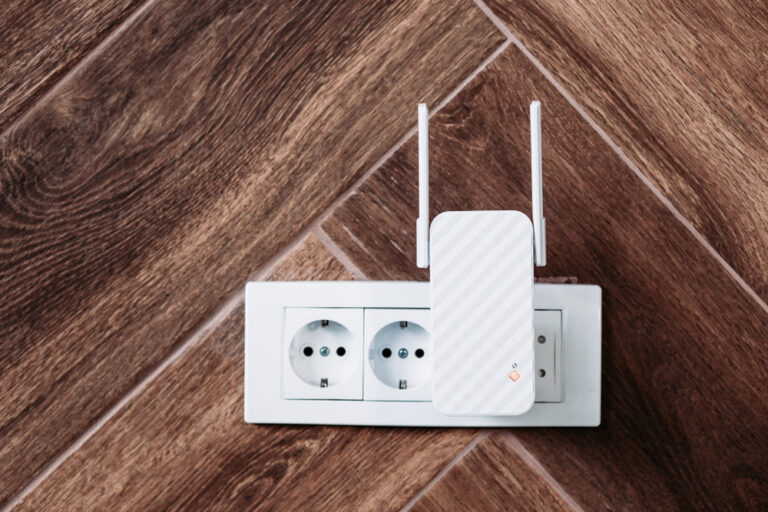
Every owner of this device would benefit from being familiar with the fundamental ideas behind how a wireless signal amplifier functions. This equipment is frequently required. A device that boosts the Wi-Fi signal, for instance, will be the solution if there are issues with receiving a reliable signal in various locations across the home or business. With its assistance, you may expand the coverage area outside the building, cover remote corners, other levels, and double the coverage area.
How do repeater and amplifier vary from one another
In essence, amplifiers and repeaters are the same thing. They are used to ensure an improvement in signal range and to broaden the area where you can use the Internet normally. The devices’ designs could, however, be different.
Sometimes, the coverage issue can be resolved without selecting and purchasing an additional amplifier. The Wi-Fi router’s installation location only has to be changed for the signal to become reliable. You must contact hardware support if this does not produce the intended outcome.
If the mobile device is far from the tower, the functioning of the cellular signal amplifier is required for mobile Internet.
When amplification is required
As suggested by their name, wireless networks transfer data by radio waves rather than wires. The basic workings of a Wi-Fi signal amplifier are as follows: data is inputted into the adapter, which converts it into a series of radio signals; the radio signals are then picked up by the antenna; the signal is then transmitted to the router, which converts it and directs the data to the Internet; finally, when the router receives data from the Internet, it also converts and sends a radio signal to the appropriate adapter using the antenna.
The main causes of Wi-Fi network operating challenges are obstructions to the radio signal. Typically, the coverage area within the home is no larger than 45 meters. Even a huge country home and enormous company offices might not have enough space for this. The signal is considerably diminished by reinforced concrete walls, which make up the majority of structures. Without adding extra router signal amplification, many barriers cannot be bypassed. However, if you add an amplifier, work can continue comfortably.
The foundation of operation
There is gear that can effectively enhance the signal. Wi-Fi amplifiers, repeaters, repeaters, or repeaters are the names of these gadgets. They address this issue if the router’s power is insufficient.
A router is the primary signal source that enables wireless Internet communication. Modern versions have a fairly wide operating range, but if the terrain is tough (there are many strong buildings and other obstructions that block the signal from moving), it is necessary to use wireless signal amplification on the route to the destination.
The amplifier intercepts the signal as it travels and sends a replica of it that has been amplified. This offers a chance to go over an impassable barrier without losing knowledge. What’s happening basically is as follows:
The router’s signal is duplicated by the amplifier (retransmission), which receives the signal of the device and switches between the main router and the amplifiers.
The receiving device immediately establishes a connection to another network when one goes down.
Signal amplification and retransmission take some time, however using strong amplifiers generally only marginally slows down data exchange—by no more than 15%. For the majority of users, this speed loss is not crucial. Amplifier-created networks have the same level of security as conventional routers.
Due to their small size, they can increase the access zone by many miles. These items can be purchased in stores that sell computer and technology equipment. Equipment is inexpensive, and specific training is not needed to use it. The apparatus functions independently after being connected.
Poor reception and frequent signal loss are indicators that a relay is needed.
Various amplifier types
Two categories of amplifiers are distinguished:
- Active;
- passive.
Active amplifiers, strictly speaking, are what retransmit signals and increase the coverage area. They are referred to as repeaters or repeaters for this reason. The electrical network provides power to these machines.
In essence, passive amplifiers are Wi-Fi antennas with added features. They are directly linked to the router or another device that receives the signal rather than the electrical grid.
Important factors for passive amplifiers:
Amplification factor, operating frequencies, and directionality are all important factors to consider when purchasing an antenna. The directionality can either be a complete 360-degree circle or just a certain sector.
Important selection criteria
The following qualities need to be taken into consideration when selecting an amplifier of any kind.
Tempo of work
The better, the bigger it is. There is only one restriction, though: the speed cannot be slower than that of the primary router. The relationship would be meaningless otherwise.
Network protocols
Various Wi-Fi protocols exist. Purchasing equipment that supports several possibilities is preferable. Higher speed and improved working conditions are provided. The technician will manually configure the necessary settings before initiating the automated changeover.
Nutrition
Most models use mains power to operate. But some demand USB ports for connecting.
Connectors A few versions let you attach other appliances, such as lighting, heaters, and fans. If using such equipment is desired, selecting a solution with the proper connectors is necessary.
The use of a Wi-Fi coverage extender is an easy way to give all users access to reliable high-speed Internet.